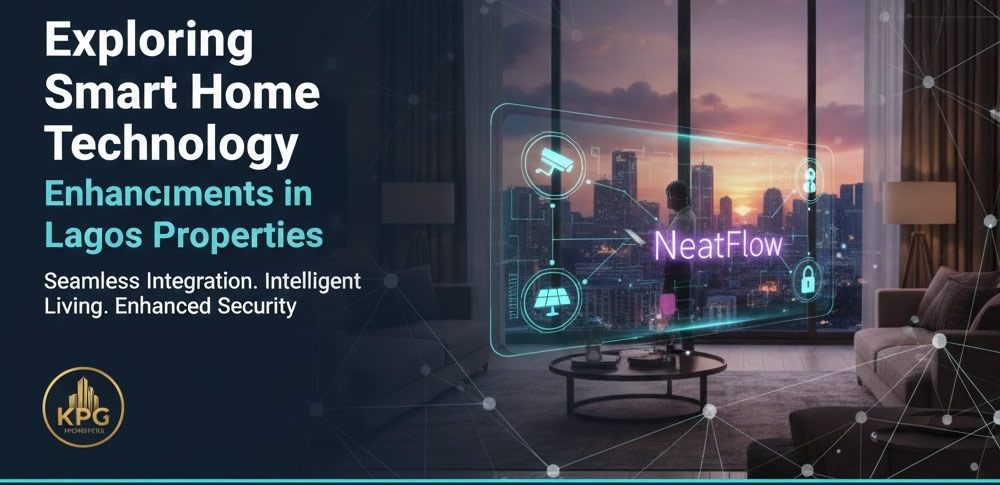
Lagos, a city defined by its dynamism and rapid urbanization, is currently undergoing a quiet yet profound revolution in its residential sector. As disposable income rises and a younger, tech-savvy generation becomes the dominant home-buying force, the simple luxury apartment is no longer enough. Buyers are demanding intelligence, and developers are responding by integrating smart home technology (SHT) from the ground up.
This shift isn’t just about glamour; it’s a practical necessity driven by the Nigerian context. In Lagos, where security and power reliability are prime concerns, SHT offers tangible solutions that transform daily living and redefine property value.
1. The Core Value Proposition: Energy Resilience and Efficiency
In a market consistently challenged by power instability, the greatest value a smart home offers is the ability to manage and optimize energy use. The trend isn’t toward fully automated but power-dependent systems; it’s towards systems that ensure stability and cost savings.
- Integrated Solar Management: Modern luxury and mid-range estates now prioritize the integration of renewable energy. Smart systems link solar inverters, battery banks, and public power sources. They use predictive analytics to decide whether to draw grid power or switch to solar based on usage patterns, time of day, and battery levels, drastically reducing reliance on noisy, costly generators.
- Intelligent Load Shedding: Smart plugs and lighting controls allow homeowners to track and manage energy consumption in real-time. Occupancy sensors ensure lights and air conditioning units are switched off in empty rooms, minimizing waste and resulting in lower utility bills—a major draw for Lagos residents.
2. From Gated Security to Automated Peace of Mind
Security has always been a primary driver of real estate value in Lagos. Smart technology elevates this from physical guards and high fences to a seamlessly integrated, remote-controlled system.
- Smart Access and Biometrics: Keyless entry is becoming standard. Smart locks, biometric scanners, and video doorbells allow residents to grant or deny access remotely via their smartphones, track who enters and leaves the property, and communicate with visitors from anywhere in the world.
- 24/7 Remote Surveillance: Integrated CCTV systems, coupled with motion detectors and alarm systems, provide real-time alerts. This continuous digital vigilance offers an unparalleled layer of security, giving property owners, especially those in the diaspora, genuine peace of mind about their assets.
3. Automation and Convenience: Redefining Luxury
Beyond security and energy, smart homes enhance the basic level of convenience, turning an ordinary house into a responsive, personalized living space.
- Climate and Scenario Control: Residents can preset “scenes.” For instance, a “Coming Home” scene might automatically unlock the main door, turn on the entryway lights, lower the air conditioning, and start a specific playlist—all triggered by geo-fencing as the resident approaches the estate.
- Health and Maintenance Monitoring: Smart devices can monitor everything from air quality to water usage. Leak detectors and smart smoke alarms send instant mobile notifications, allowing homeowners to prevent minor issues from becoming catastrophic, which is critical in a city where construction quality can vary.
The Financial Edge: SHT Increases Property Value
The impact of smart home technology is no longer limited to lifestyle; it is directly impacting the financial viability of an investment. Studies, particularly in high-demand areas like Lekki, show that SHT-enabled properties attract a significant premium—often 15% to 30% higher than comparable traditional homes.
For investors, this means two things: higher capital appreciation upon resale and more competitive rental yields, especially for the lucrative short-let market catering to business travelers and the diaspora.
The Future is Connected
While the high initial cost remains a barrier for mass adoption across all income segments, the modular nature of SHT is making it more accessible. Developers are increasingly offering scaled-down, essential packages—focusing on smart security and energy—to appeal to the burgeoning middle class.
The Lagos real estate market is on a trajectory to prioritize smart, sustainable, and secure living. Whether you are a first-time buyer or a seasoned investor, recognizing and prioritizing SHT integration is key to ensuring your property remains relevant and retains its premium value in the evolving African megacity.